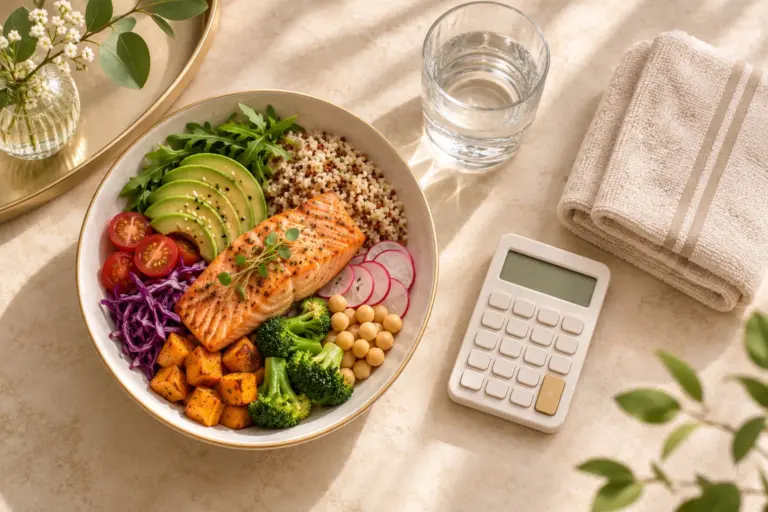
Get a reference range, understand the calculation and make your next nutrition conversation more useful.
You can add up the protein on a food label and still be unsure what total makes sense for you. This calculator makes one part transparent: the arithmetic behind a range used in weight-management research.
It does not know your health history, kidney function, activity or nutritional needs. Use the result as a question to bring to your clinician or dietitian, not as a rule you must hit.
Protein calculator
For adults 18+. This shows a research-based reference range, not a prescribed target. Do not use it for pregnancy, breastfeeding, kidney disease, a prescribed protein restriction or an eating-disorder history; ask your care team instead.
Your inputs are calculated in this page and are not sent by this tool.
How the calculation works
The tool converts pounds to kilograms, then multiplies body weight by 1.2 and 1.6. A research review by Leidy and colleagues discussed this daily grams-per-kilogram range in higher-protein weight-management diets. That evidence does not establish the same target for every person.
Worked example: at 75 kg, the arithmetic produces 90–120 grams per day. This is an illustration, not a suggested intake for every adult who weighs 75 kg. In some cases, using current body weight can overestimate needs.
Make the result useful without making food complicated
Before changing your diet, look at your usual meals. Which already contain a protein food? Which leave you hungry or are hard to fit into your day? Bring those observations to your next visit. A realistic routine matters more than chasing a perfect-looking number.
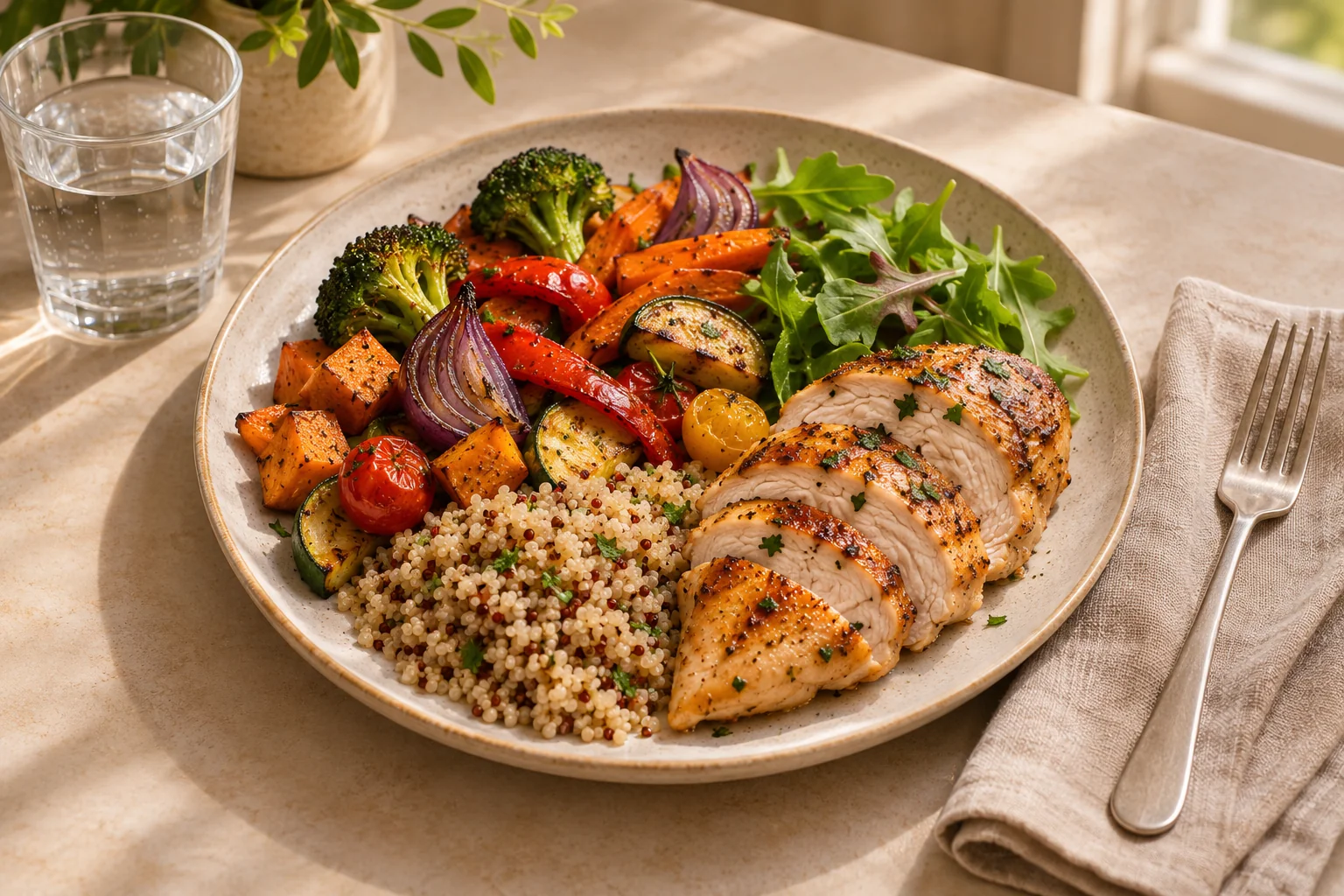
Protein can come from foods such as beans, lentils, tofu, yogurt, eggs, fish or poultry. The rest of the meal still matters: fiber-rich foods, vegetables, fluids and enough overall nutrition belong in the conversation.
If you are taking a weight-management medication
If eating has become difficult, appetite is very low or symptoms interfere with meals, talk to your prescribing team. A protein calculator cannot assess whether you are getting enough nutrition, adjust medication or diagnose a side effect.
Protein and calories answer different questions
Protein is one part of food intake. Our TDEE calculator estimates total maintenance energy needs. Neither tool can promise a weight-loss rate, and neither replaces a care plan based on your health.
Questions to ask your care team
- Is this range appropriate for my medical history?
- Which body-weight reference should we use?
- How can I meet my needs with foods I enjoy?
- What should we monitor as my weight or activity changes?
Sources & further reading
Updated November 23, 2026. General education; your care plan depends on an individual assessment.